Parent Information: Vitamin D for Infants and Young Children
Content
- Vitamin D for Infants and Young Children
- How much vitamin D do children need?
- Infants (below 12 months) Get enough vitamin D
- Young children and vitamin D
- Obtain adequate calcium in diet to support bone growth
- Frequently asked questions about vitamin D
Vitamin D for Infants and Young Children
Vitamin D is essential for bone health. Vitamin D helps calcium absorption in the gut, and maintains normal levels of calcium and phosphate in blood, keeping bones strong. Also, vitamin D is important for regulating cell growth, neuromuscular and immune function in the body.
Most of the vitamin D is produced in body when our skin is exposed to sunlight. A small amount of vitamin D comes from our diet.
Vitamin D deficiency
In infants and children, persistently low vitamin D levels may cause rickets, resulting in soft bones, deformed bones, bone fractures, poor growth, and a low blood calcium level, which may lead to convulsion.
How much vitamin D do children need?
Healthy infants need 400 IU (10 micrograms) of vitamin D daily. Children above 1 year of age require 400 to 600 IU (10 to 15 micrograms) of vitamin D daily.
Infants (below 12 months) Get enough vitamin D
- Breastmilk has many benefits and is the ideal food for babies. However, like other foods, breastmilk does not contain much vitamin D and is not sufficient to meet the daily requirement of infants.
- Vitamin D is produced when the skin is exposed to sunlight. However, infants are at a higher risk of suffering UV damage. They are recommended to stay in the shades.
- All breastfed infants (exclusively breastfed and those taking both breastmilk and infant formula) are recommended to take a vitamin D supplement of 400 IU (10 micrograms) daily. This can help them maintain a sufficient and stable vitamin D level.
- Infant formula is fortified with vitamin D. Infants who are formula-fed exclusively do not need to take supplement.
- Note: Some infants may need vitamin D supplement due to their medical conditions. The amount of vitamin D needed may be different. Parents should follow their doctor's instructions to provide the vitamin D supplement their babies require.
How do I give my baby vitamin D supplement?
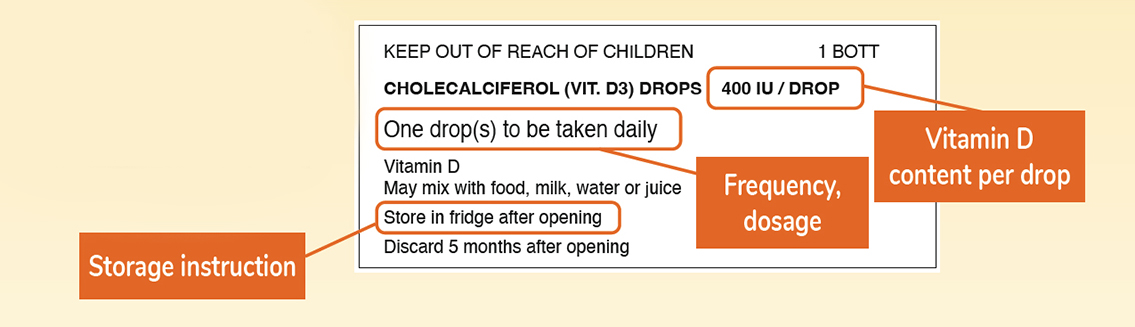
- Vitamin D supplement is usually in form of vitamin D drop. The amount of vitamin D per drop may vary among different products.
- Infants only need 400 IU of vitamin D daily. You should not give your baby more than this level unless advised by your doctor.
- Follow the dosage and frequency instructions from your doctor or pharmacists when giving your baby vitamin D supplement. The instructions are shown on the drug label of supplement dispensed.
- If choosing one yourself, pay attention to the product label and check the vitamin D content. Choose the vitamin D supplement with a daily dosage of 400 IU (10 micrograms) and give it according to the instructions on the product to avoid overdosing your baby. If you have any questions, please consult a healthcare professional.
- Store the product in an appropriate place and within the range of temperature according to the instructions.
- Excessive intake of vitamin D can cause high calcium level in blood which can affect health. Infants taking vitamin D supplements should avoid taking cod liver oil and other nutrient supplements containing vitamin D.
- You can give the vitamin D supplement in one of the following ways:
- Give the supplement directly into your baby's mouth; or
- Mix the supplement with a small amount of breastmilk, formula milk, or purée foods (for babies after 6 months of age) in a sterilised spoon and offer the mixture to your baby; or
- Put the supplement onto the nipple or surrounding area (areola) of the breast and let your baby suckle for 30 seconds.
When should I open a new bottle of vitamin D supplements?
- Parents should pay attention to the expiry date on the package of the supplement. Change to a new bottle if expiry date has passed.
- Some supplement products can only be used within a specified period after the bottle is opened. Parents should read the instructions on the product package or drug label and change to a new bottle if the specified period has passed.
What should I do if I have forgotten to give my baby vitamin D supplement for a few days?
- Give the dose for today (400 IU of vitamin D) to your baby. Then continue to give it daily.
- Here are some ways to help you remember:
- Place a reminder near the place you nurse your baby;
- Use an alarm or a daily reminder in your calendar on your mobile phone.
My 6-month-old baby starts taking solid foods, should I continue offering her the supplement?
- If your baby is still taking breastmilk, she should continue to take vitamin D supplement until 12 months of age.
- Your baby can also get vitamin D by consuming oily fish (such as salmon, halibut) and eggs after 6 months of age.
Young Children and Vitamin D
After 12 months of age, engaging in outdoor physical activities and eating a healthy diet helps children get enough vitamin D and supports healthy bone growth.
Outdoor play and sun exposure
- Young children are active and full of energy. They need to play outdoors and engage in physical activities regularly.
- Exposing the skin to sunlight while playing outdoors helps children maintain adequate vitamin D level.
- Playing outdoors provides more space for a wider range of activities. This supports children's development. Let your child play in parks or playgrounds, e.g. walking, blowing bubbles, running, jumping, throwing and chasing balls, using playground facilities, etc.
- Safety under the sun: Strong sunlight can cause skin burn. Parents and children should pay attention to sun safety tips during outdoor activities, such as using sunscreen. Research shows that using sunscreen does not reduce the vitamin D production in the body1.
Consume vitamin D-containing foods
- Include foods with vitamin D in your family's diet regularly as part of a balanced diet.
- Choose oily fish, eggs, etc. Consume cow's milk, milk products and calcium-fortified soy milk with vitamin D added. How do I know if the food product is fortified with vitamin D?
After 1 year old, do children need to take vitamin D supplements?
Most of the vitamin D in our body comes from sun exposure on our skin. Children with limited sun exposure or certain conditions such as having dark skin, always wearing clothing covering their arms and legs when being outdoors, staying indoors most of the time, being obese, or having medical conditions (e.g. liver disease, kidney disease), etc. may need a vitamin D supplement of 400 IU per day. Parents are advised to consult healthcare professionals if they have concerns.
Obtain adequate calcium in diet to support bone growth
- Inadequate calcium intake may increase the risk of rickets.
- Babies under 12 months can meet their calcium requirement by consuming breastmilk or infant formula.
- Children of 1 to 3 years old need 500 mg of calcium every day2. They should consume 360 to 480 ml of milk and milk products or calcium-fortified soy milk every day and include a variety of foods in their diet while continuing to be breastfed.
Frequently asked questions about vitamin D
1. I am breastfeeding and taking a multivitamin containing vitamin D. Does my baby still need vitamin D drops?
- It is a good idea for breastfeeding mothers to take a daily vitamin D supplement to ensure they have sufficient vitamin D themselves.
- All breastfed babies from birth to 12 months should receive a daily vitamin D supplement of 400 IU (10 micrograms), regardless of whether their mother is taking one. This ensures the baby gets enough vitamin D.
2. What are the precautions about taking vitamin D supplements?
- Vitamin D supplements are safe when taken in the amount advised by healthcare professionals. If you consider giving your child a vitamin D supplement, it is essential to consult a healthcare professional and follow the instructions on the drug or dispensary label before giving it to your child.
- Various health authorities have set the Tolerable Upper Intake Level (UL) for vitamin D, which means the highest level of chronic daily nutrient intake that is likely to pose no risk of adverse health effects for almost all individuals in the general population. As intake increases above the UL, the risk of adverse effects increases.
- The Chinese Nutrition Society sets the UL of vitamin D for children aged 0 to 3 at 800 IU (20 micrograms) per day2. A higher UL of vitamin D is recommended in the US and Europe: UL for infants aged 0 to 6 months is 1000 IU (25 micrograms) per day, and UL for infants aged 6 to 12 months is 1400 IU (35 micrograms) per day3,4.
- Taking excessive vitamin D for an extended period can potentially lead to vitamin D toxicity. Its occurrence is rare and usually caused by taking large doses of vitamin D supplements for long period of time due to misuse or errors in administration. In terms of clinical presentation, vitamin D toxicity can lead to high calcium levels in blood with the signs and symptoms of nausea, vomiting, muscle weakness, neuropsychiatric disturbances, pain, loss of appetite, dehydration, polyuria, excessive thirst, and consequence of kidney stones, cardiac arrhythmia, renal failure in extreme cases. If you suspect having excessive vitamin D intake, you should seek medical advice promptly.
- To minimise the risk of excessive vitamin D intake, the public should consult healthcare professionals before using vitamin D supplements and take them in the amount recommended. For infants taking vitamin D supplements, they should avoid taking other vitamin D-containing nutrient supplements and cod liver oil.
3. Do exclusively formula-fed infants need to take a vitamin D supplement?
- Infants who are solely fed with formula milk generally do not need a vitamin D supplement.
- Infant formula is fortified with vitamin D. According to the Food and Drugs (Composition and Labelling) (Amendment) (No.2) Regulation 2014, infant formula sold in Hong Kong must contain 1 to 2.5 μg (40 to 100 IU) of vitamin D per 100 kcal. There is little difference in vitamin D content among different infant formula products. The amount of vitamin D provided per 100 ml of formula milk of the product is shown on the nutrition label of the product package.
- Although their vitamin D intake varies with the amount of formula milk consumed, babies generally meet most of their vitamin D requirement with the amount of milk they drink. A local study indicated the vast majority of infants who were exclusively formula-fed had sufficient vitamin D.
- If you have any concerns about your baby's feeding and vitamin D intake, please consult healthcare professionals.
4. My child is 12 months old or above. Should he continue taking a vitamin D supplement?
- All breastfed babies under 12 months of age are recommended to take a vitamin D supplement.
- As children grow, they are encouraged to adopt a healthy lifestyle that includes eating a balanced diet with foods rich in vitamin D, and engaging frequently in outdoor physical activities associated with sunlight exposure to obtain sufficient vitamin D.
- If your child consumes few foods added with vitamin D (e.g. vitamin D-fortified milk products), has limited sun exposure, stays indoors most of the time, always wears clothing covering his arms and legs when outdoors, has dark complexion, or is obese, etc., he may not obtain enough vitamin D. He may still need to take the vitamin D supplement of 400 IU per day. If you have any concerns, please consult a healthcare professional.
5. Does my child need to take a calcium supplement?
- According to the Chinese Nutrition Society, the adequate intake of calcium for infants of 0 to 6 months old is 200 milligrams (mg), and 7 to 11 months old is 350 mg per day2.
- Babies under 12 months usually do not need calcium supplementation as breastmilk or infant formula can meet their calcium requirements. After 6 months of age, babies also obtain calcium from calcium-rich foods in the complementary diet.
- Children of 1 to 3 years old need 500 mg calcium per day2. A diet consisting of 360 to 480 ml of cow's milk (or calcium-fortified soy milk, yoghurt or cheese) along with a variety of foods, can usually meet their daily calcium requirements.
- You should consult your doctor or dietitian if you have concerns about your child's diet and calcium intake. They can conduct assessment about your child's diet and health as a whole and give advice on the need for calcium supplement.
- The following table shows the calcium content of the calcium-rich foods5 in toddler's portion size.
| Food or beverages | Serving size | Calcium content (mg) |
|---|---|---|
| Milk & milk products | ||
| Whole milk | 120 ml | 135 |
| Yoghurt | 100 ml | 175 |
| Processed cheese | 1 slice (20 g) | 118 |
| Soy products | ||
| Calcium-fortified soy milk | 120 ml | 110 to 200 |
| Firm tofu | ¼ block (100 g) | 116 to 201 |
| Soybean curd slab | 1 piece (30 g) | 92 |
| Soybean dessert | ½ bowl (151 g) | 130 |
| Dried beans or legumes | ||
| Soy beans | ¼ cup boiled (43 g) | 44 |
| Pinto beans | ¼ cup boiled (43 g) | 20 |
| Chickpeas | ¼ cup boiled (41 g) | 20 |
| Vegetables | ||
| Choi sum | 2 tablespoons cooked, diced (40 g) | 32 to 44 |
| Bok choi | 2 tablespoons cooked, diced (40 g) | 37 to 47 |
| Spinach | 2 tablespoons cooked, diced (40 g) | 54 to 61 |
| Nuts and seeds | ||
| Sesame butter, tahini | 1 tablespoon (15 g) | 49 to 153 |
6. What are foods rich in vitamin D?
- Foods such as oily fish and eggs are naturally rich in vitamin D. Vitamin D may be added to some foods, such as cow's milk, soy milk and breakfast cereals. Offer these foods to your child daily as part of a balanced diet to boost their vitamin D intake.
- Examples and vitamin D content of vitamin D-rich foods:
| Food items | Serving size | Vitamin D content | |
|---|---|---|---|
| Microgram | IU | ||
| Salmon, raw6 | 40g | 5.6 | 224 |
| Catfish, raw6 | 40g | 5 | 200 |
| Halibut, raw6 | 40g | 11 | 440 |
| Cod, raw7 | 40g | 3.1 | 124 |
| Grey mullet, raw7 | 40g | 3.2 | 128 |
| Mackerel, raw8 | 40g | 4 | 160 |
| Golden thread, raw8 | 40g | 4.4 | 176 |
| Pacific saury, raw8 | 40g | 6 | 240 |
| Sardine, cooked6 | 40g | 1.9 | 77 |
| Chicken egg, raw6 | ½ egg (25 g) | 0.5 | 20 |
| Beef liver, raw6 | 40g | 0.5 | 20 |
| Cow's milk with vitamin D added9 | 120ml | 0.6 to 2.7 | 24 to 108 |
| Calcium-fortified soy milk with vitamin D added9 | 120 ml | 0.9 to 1.2 | 36 to 48 |
| Breakfast cereal with vitamin D added9 | 30g | 0.7 to 1.5 | 28 to 60 |
7. How do I know if a food product contains added vitamin D?
You can check the food label on the product package. Kindly note that:
- The list of ingredients should include vitamin D if it is added to the product;
- Some products would show the amount of vitamin D on the nutrition label;
- Some products would show nutrition claims about vitamin D on the packaging.
Reference:
- British Association of Dermatologists. (2019) News & Media. Sunscreen application does not prevent vitamin D production in the majority of people. Retrieved from: https://www.bad.org.uk/sunscreen-application-does-not-prevent-vitamin-d-production-in-the-majority-of-people/ Accessed on 24th June, 2025
- Chinese Nutrition Society. Dietary Reference Intakes for China (2023 edition)
- European Food Safety Authority (EFSA). (2018). Update of the tolerable upper intake level for vitamin D for infants, EFSA Journal, 16(8), 5365. https://doi.org/10.2903/j.efsa.2018.5365 Accessed on 24th June, 2025
- U.S. Department of Health and Human Services National Institutes of Health (NIH) Office of Dietary Supplements. (2023). Vitamin D fact sheet for health professionals. Retrieve from: https://ods.od.nih.gov/factsheets/VitaminD-HealthProfessional/ Accessed on 24th June, 2025
- The Nutrient Information Inquiry System, Centre for Food Safety, except the calcium content of calcium-fortified soy milk which comes from the packages of local calcium-fortified soymilk.
- Data from the USDA FoodData Central data (https://fdc.nal.usda.gov/)
- Data from the Health Promotion Board of Singapore (https://www.hpb.gov.sg/healthy-living/food-beverage/tools)
- Standard Tables of Food Composition in Japan - 2015 (https://www.mext.go.jp/en/policy/science_technology/policy/title01/detail01/1374030.htm)
- Information from the nutrition labels on local product packaging